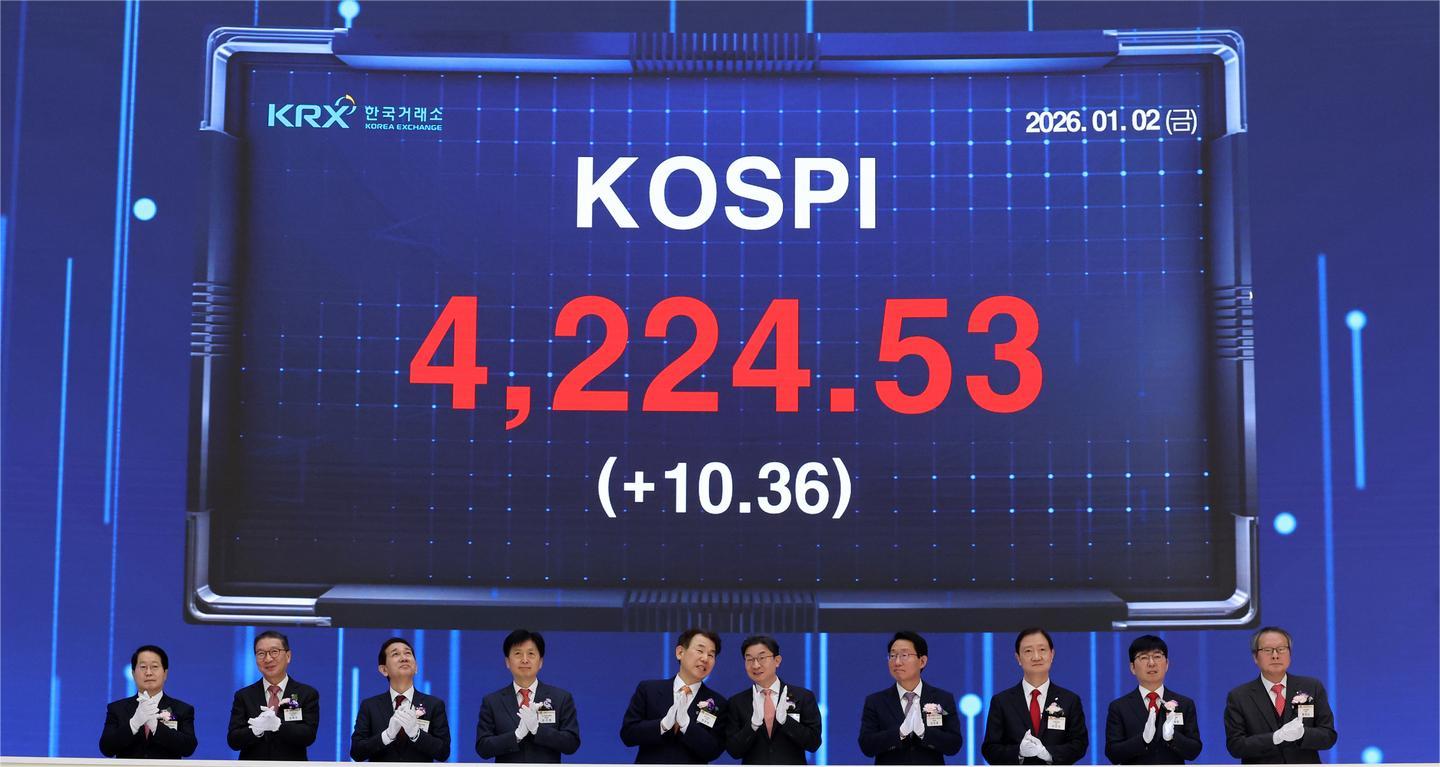
South Korea Leads Asia Higher at Start of 2026
Key Highlights:
1. South Korea’s Kospi hits a record high, leading Asia into 2026
2. Singapore economy grows 5.7% in Q4, fastest pace since 2021
3. Regional markets mixed as holidays and U.S. pullback weigh sentiment
South Korea’s Kospi Hits Record High as Asia Trades Mixed at the Start of 2026
Asian financial markets began 2026 on a mixed footing, with South Korea’s Kospi index surging to a record high, setting a confident tone for the region despite thinner liquidity and lingering caution after a late-year pullback on Wall Street. The divergence across markets reflects a complex start to the new year, shaped by holiday closures, selective economic optimism, and investor repositioning following a volatile 2025.
The Kospi’s record-breaking move underscores renewed confidence in South Korea’s equity market, driven by strong performances in technology, semiconductors, and export-oriented stocks. Analysts point to expectations of stabilizing global demand, resilient corporate earnings, and sustained interest in AI-linked and advanced manufacturing sectors as key drivers behind the rally. The index’s milestone also comes after a period of consolidation in late 2025, suggesting investors are entering the new year with a higher risk appetite.
Elsewhere in Asia, trading was uneven. Japan and mainland China remained closed for public holidays, keeping regional volumes subdued. Australia’s stock market traded flat, reflecting a cautious stance as investors await clearer signals on global growth and interest rate trajectories. Hong Kong markets, however, appeared poised for a stronger open, supported by selective bargain-hunting and optimism around Chinese stimulus expectations.
Adding to the region’s positive macro narrative, Singapore reported a 5.7% expansion in its economy in the fourth quarter, marking its fastest growth since 2021. The surge was largely driven by manufacturing output, particularly in electronics and precision engineering, reinforcing Singapore’s role as a bellwether for global trade and industrial demand. Economists say the data strengthens the outlook for Southeast Asian economies entering 2026, even as external risks persist.
The mixed Asian session followed a pullback in U.S. markets on New Year’s Eve, as Wall Street locked in profits after a strong 2025 rally. That move injected a note of caution into early Asian trade, especially among investors sensitive to global liquidity conditions and U.S. monetary policy expectations.
From a broader perspective, market participants are increasingly focused on regional divergence rather than blanket optimism. Search trends around Asian stock market outlook, Kospi record high, and Singapore GDP growth suggest rising investor interest in country-specific fundamentals rather than generalized emerging-market exposure.
As 2026 unfolds, strategists expect Asia’s performance to hinge on policy support, technology demand, and global growth momentum. For now, South Korea’s record-setting start offers a strong signal—but the mixed regional picture highlights that the new year is beginning with both opportunity and caution firmly in play.